From storage silos to sea lanes, the journey of a crop explains why transport has become a central part of Ukraine’s wartime economy.
A crop becomes an export only when it can reach a buyer. For Ukraine, Russia’s full-scale invasion in 2022 made that basic fact an immediate economic problem. Ports, roads, railways and storage facilities became part of the same struggle to keep trade moving.
Grain can travel overland into neighbouring countries or through Danube and Black Sea ports. Those routes have different capacities and costs. Moving a bulk cargo repeatedly between trucks, trains and ships adds expense before it reaches its destination.
Why the route matters
Rail transport has another complication: Ukraine and much of the European Union use different track gauges. At some borders, freight needs to be transferred or wagons adapted. More handling can mean longer queues and less predictable delivery.
Sea transport is well suited to large volumes, but war makes port operations, insurance and navigation more uncertain. A functioning corridor is therefore about security as much as physical access.
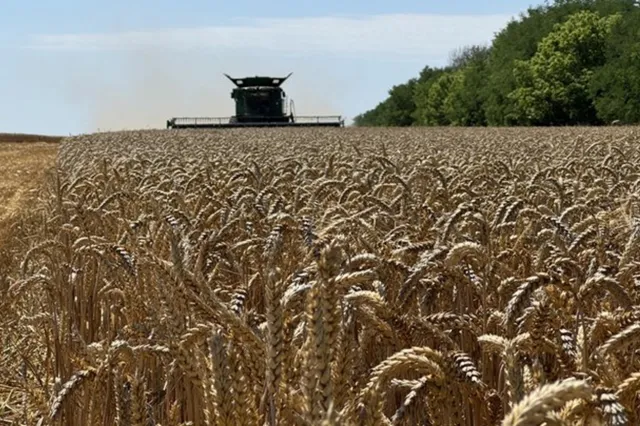
A harvest is only the beginning
The effects extend beyond exporters. Transport costs influence what farmers receive and whether they can finance the next season. Looking only at the tonnage harvested misses an essential part of the story: how reliably, and at what price, that grain can leave the country.