Impact craters help scientists reconstruct a history of collisions. Their survival tells a different story on the Moon and on Earth.
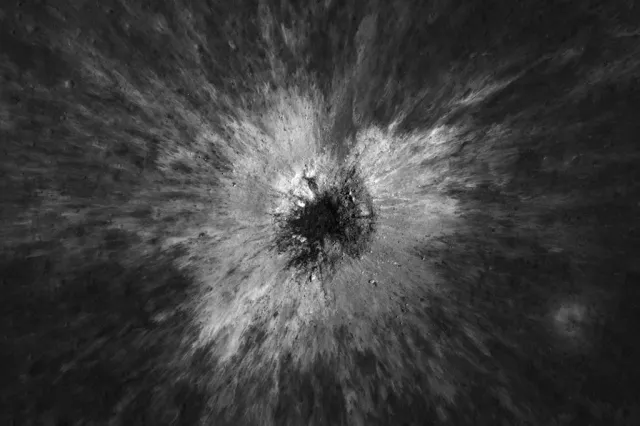
The Moon’s surface is covered with the marks of impacts. Some craters are sharp and surrounded by bright rays; others have been worn down or partly buried by later events. Together, they provide evidence of the Solar System’s history.
Earth has also experienced impacts, but it does not preserve them in the same way. Weathering, erosion and the movement of tectonic plates can obscure or destroy structures that would remain visible on a less active surface.
Counting is a form of comparison
Scientists compare the density and condition of craters across different areas to help establish relative ages. A surface that has remained exposed for longer generally has had more opportunities to collect impact marks.
That method needs calibration. Samples with ages measured in laboratories help connect patterns seen from orbit to a timescale. Images and physical material answer related but different questions.
A landscape that changes slowly
The Moon is not completely static. Small impacts continue to disturb its surface, and the environment alters exposed material over time. Nevertheless, many features survive far longer than comparable structures on Earth.
A crater photograph is therefore more than a striking view. It is a record that scientists read alongside samples, measurements and models.